
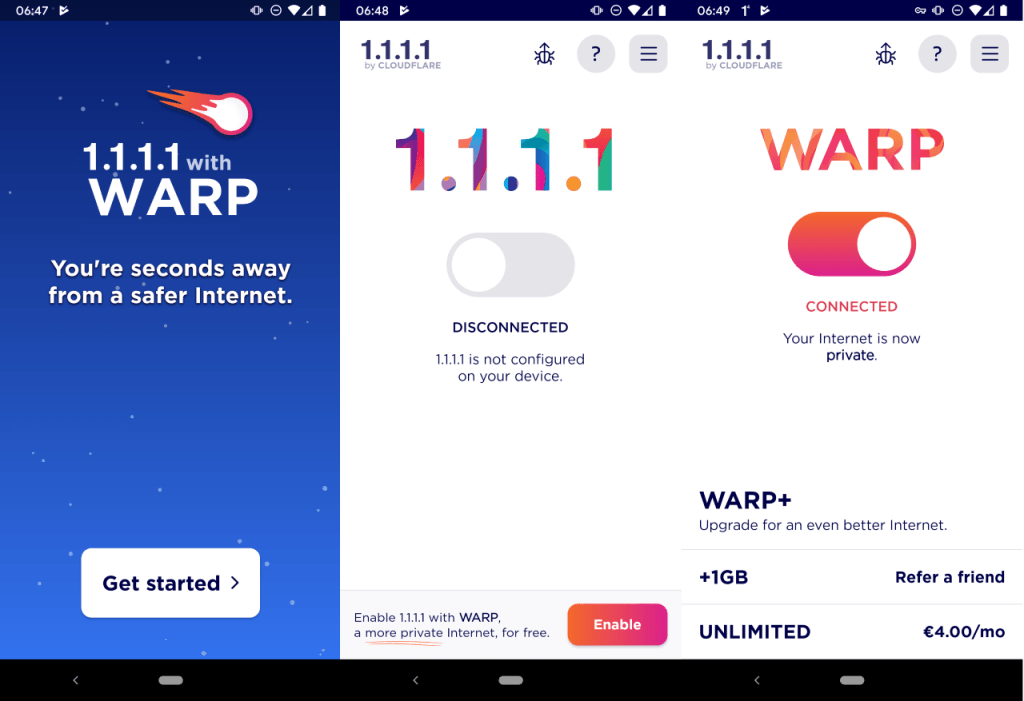
The internet is an amazing resource, allowing us to connect with people and access information from around the world. However, it also has its share of dangers, with cybercriminals and hackers always on the lookout for vulnerable targets. As a result, many people turn to virtual private networks (VPNs) to protect their online activities. But recently, a new alternative has emerged: 1.1.1.1, a privacy-focused DNS service from Cloudflare. In this blog post, we’ll take a closer look at 1.1.1.1 vs VPN and help you decide which one is right for you.
What is 1.1.1.1? 1.1.1.1 is a free DNS resolver offered by Cloudflare, a company that provides a variety of internet-related services. DNS stands for Domain Name System, which is essentially a phonebook for the internet. When you type a URL into your web browser, your computer uses DNS to look up the IP address associated with that domain name. 1.1.1.1 promises to be the fastest and most private DNS resolver available, with a focus on protecting user privacy.
What is a VPN? A VPN is a virtual private network, which creates a secure and encrypted connection between your device and the internet. When you connect to a VPN, your traffic is routed through an encrypted tunnel to a remote server, which then connects to the internet on your behalf. This allows you to browse the internet anonymously and securely, without worrying about anyone snooping on your activities.
1.1.1.1 vs VPN: Pros and Cons So, which one is better: 1.1.1.1 or VPN? Here are some pros and cons to consider:
1.1.1.1 Pros:
- Faster speeds compared to most VPNs, since it doesn’t route traffic through a remote server.
- Easy to set up and use. You can simply change your device’s DNS settings to use 1.1.1.1 instead of your default DNS.
- Provides some level of privacy protection, since your DNS queries won’t be logged by your ISP.
1.1.1.1 Cons:
- Limited privacy protection compared to a VPN, since it only protects your DNS queries and not the rest of your internet traffic.
- Doesn’t offer any encryption or security beyond protecting DNS queries.
- May not work in some countries or networks, since some ISPs and networks block third-party DNS resolvers.
VPN Pros:
- Offers a high level of security and privacy protection, since all your internet traffic is encrypted and routed through a remote server.
- Can bypass geolocation blocks and censorship, since you can connect to a VPN server in a different location.
- Can be used to protect your online activities on public Wi-Fi networks or other insecure networks.
VPN Cons:
- Slower speeds compared to 1.1.1.1, since all your traffic is routed through a remote server.
- Can be more difficult to set up and use, especially for those who aren’t familiar with VPNs.
- May require a subscription fee for a quality service.
Which One Should You Use? Ultimately, the decision of whether to use 1.1.1.1 or a VPN depends on your specific needs and preferences. If you’re primarily concerned about faster speeds and some level of privacy protection, 1.1.1.1 may be a good option. However, if you need the highest level of security and privacy protection, a VPN is the way to go. Additionally, if you need to bypass geolocation blocks or protect your online activities on public Wi-Fi networks,
 Dark Legion
It’s been a good read. Kudos for taking the time to share your expertise! This is an extremely helpful post.
Wayne
LikeLike