
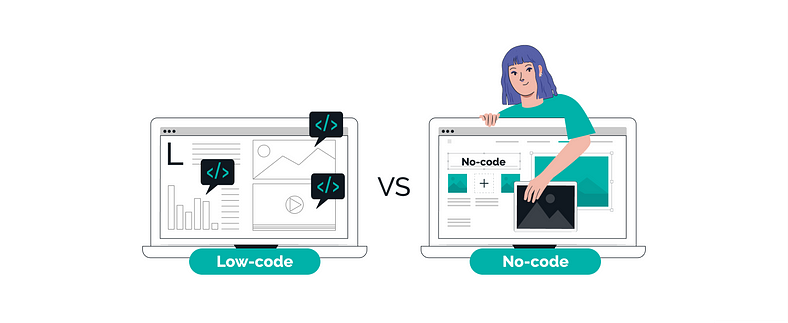
In the ever-evolving landscape of software development, low-code and no-code platforms have emerged as transformative tools, promising to democratize app development and accelerate digital transformation. These platforms empower individuals with varying technical backgrounds to create applications without the need for extensive coding knowledge. However, before diving headfirst into this burgeoning trend, it’s crucial to understand the nuances and consider several factors. Let’s explore five key considerations before embarking on the low-code/no-code journey.
1. Understanding Your Requirements: Before embracing a low-code/no-code platform, it’s essential to delineate your project requirements clearly. While these platforms offer remarkable agility and speed, they may not be suitable for complex or highly customized applications. Assess the scope and complexity of your project to determine if a low-code/no-code approach aligns with your needs. For simple applications or prototypes, these platforms can be invaluable, but for intricate systems requiring extensive customization, traditional development may still be the optimal choice.
2. Evaluating Platform Capabilities: Not all low-code/no-code platforms are created equal. Take the time to research and evaluate various platforms based on factors such as ease of use, scalability, integrations, and support for advanced functionalities. Consider conducting proof-of-concept projects or trials to gauge how well a platform aligns with your requirements. Additionally, assess the platform’s extensibility and ability to integrate with your existing systems and workflows to ensure seamless integration into your ecosystem.
3. Assessing Long-Term Maintenance and Scalability: While low-code/no-code platforms excel in rapid application development, it’s crucial to consider the long-term implications, particularly regarding maintenance and scalability. Evaluate how easily you can update and maintain applications built on these platforms over time. Additionally, assess scalability capabilities to ensure that your applications can accommodate growing user bases and evolving business requirements without compromising performance or stability.
4. Addressing Security and Compliance Concerns: Security and compliance are paramount in today’s digital landscape. Before adopting a low-code/no-code platform, scrutinize its security features and adherence to industry regulations and best practices. Assess data encryption, access controls, authentication mechanisms, and compliance certifications to mitigate security risks and ensure regulatory compliance. Additionally, consider how the platform handles sensitive data and whether it provides robust auditing and monitoring capabilities to track and mitigate potential security incidents.
5. Training and Talent Acquisition: While low-code/no-code platforms aim to democratize app development, they still require a certain level of proficiency and understanding to leverage effectively. Invest in comprehensive training programs to empower your teams with the necessary skills and knowledge to harness the full potential of these platforms. Additionally, consider talent acquisition strategies to augment your workforce with individuals proficient in low-code/no-code development, or encourage existing team members to upskill in this domain.
In conclusion, while low-code and no-code development platforms offer unprecedented agility and accessibility, adopting them requires careful consideration of various factors. By understanding your requirements, evaluating platform capabilities, assessing long-term implications, addressing security and compliance concerns, and investing in training and talent acquisition, you can navigate the low-code/no-code landscape effectively and unlock its full potential for your organization’s digital transformation journey. Embrace the possibilities, but proceed with thoughtful deliberation to ensure success in this exciting frontier of software development.
 Dark Legion