

Java is a popular programming language known for its versatility and wide range of applications. Whether you’re a beginner or an experienced programmer, learning some handy tips and tricks can greatly enhance your Java programming skills. In this blog post, we will explore five valuable tips and tricks to help you write more efficient and effective Java code.
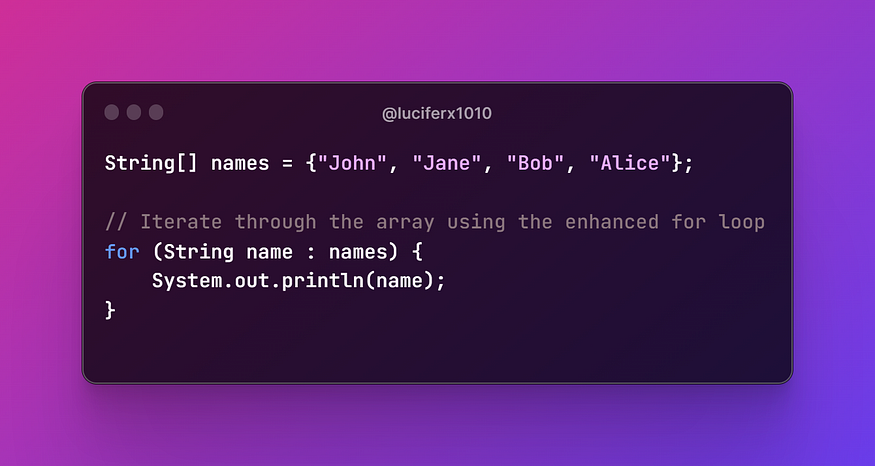
- Use the Enhanced For Loop for Iterating through Arrays: One common task in programming is iterating through an array. Java provides an enhanced for loop, also known as the “for-each” loop, which simplifies this process. By using the enhanced for loop, you can iterate through an array without the need for an index variable, making your code more concise and readable.
Example:
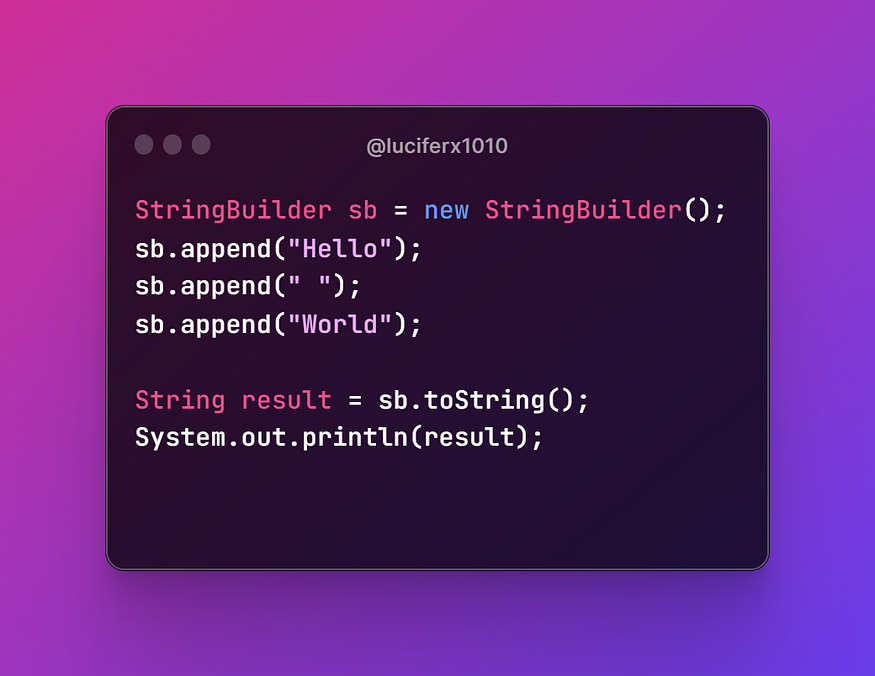
2. Utilize the StringBuilder Class for Efficient String Manipulation: In Java, manipulating strings can be a common task. However, string concatenation using the + operator can be inefficient, especially when dealing with large strings or within loops. The StringBuilder class provides a more efficient way to manipulate strings by allowing you to append, insert, or modify strings without creating unnecessary intermediate string objects.
Example:
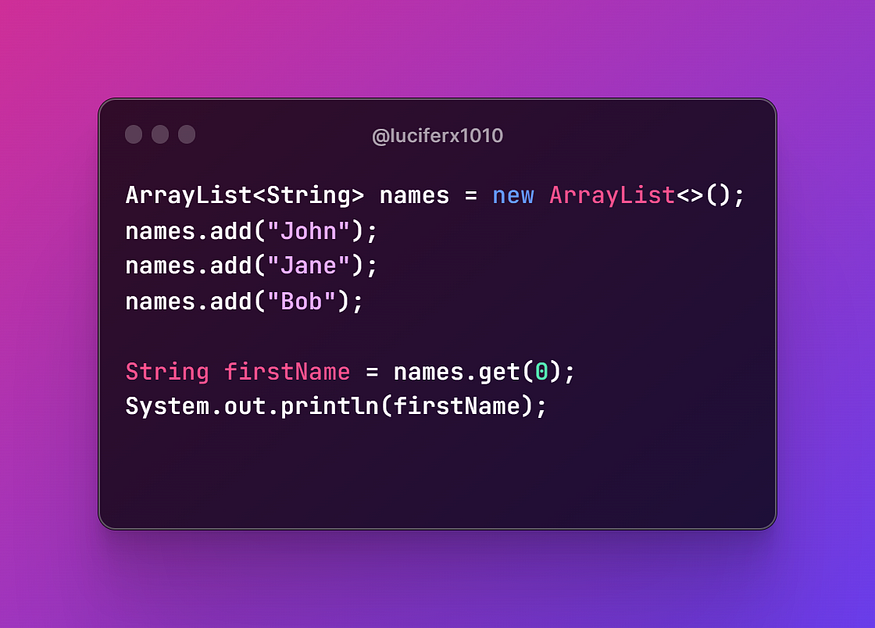
3. Take Advantage of Java’s Generics for Type Safety: Java’s generics feature allows you to specify the type of elements that a collection can hold, providing type safety and reducing the risk of runtime errors. By using generics, you can ensure that only compatible types are added to a collection, improving code reliability and readability.
Example:
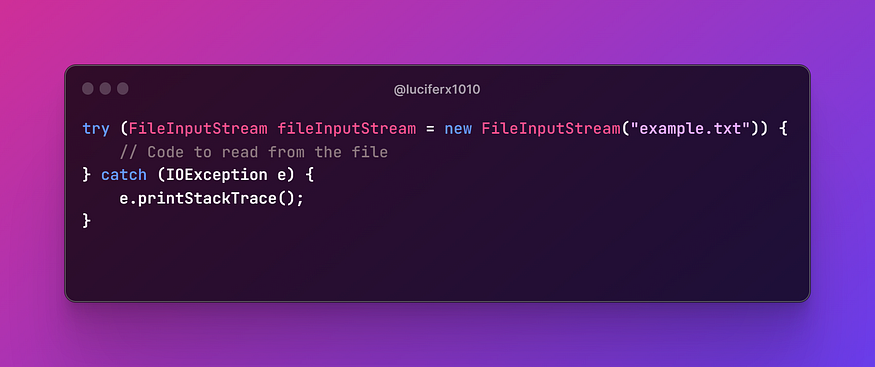
4. Use Java’s Try-with-Resources for Automatic Resource Management: When working with resources such as files, database connections, or network sockets, it’s important to properly manage and release those resources to avoid memory leaks and resource exhaustion. Java’s try-with-resources statement ensures that any resources opened within the try block are automatically closed, even in the event of an exception.
Example:
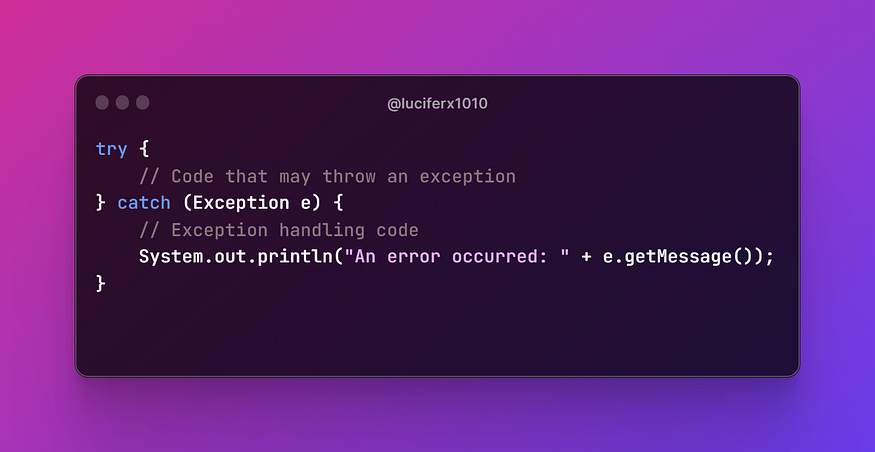
5. Take Advantage of Java’s Exception Handling for Robust Programs: Exception handling is crucial for writing robust programs that can gracefully handle errors and unexpected situations. Java provides a powerful exception handling mechanism that allows you to catch and handle exceptions, preventing your program from crashing and providing valuable error information.
Example:
By incorporating these five tips and tricks into your Java programming arsenal, you can improve your code’s efficiency, readability, and reliability. Whether you’re iterating through arrays, manipulating strings, ensuring type safety, managing resources, or handling exceptions, these techniques will help you write better Java code. So, go ahead and apply these tips in your projects to level up your Java programming skills!
Remember to keep practicing, exploring new concepts, and embracing best practices to become a proficient Java developer.
Happy coding!
 Dark Legion